
Gringo à Brasileira, 2026
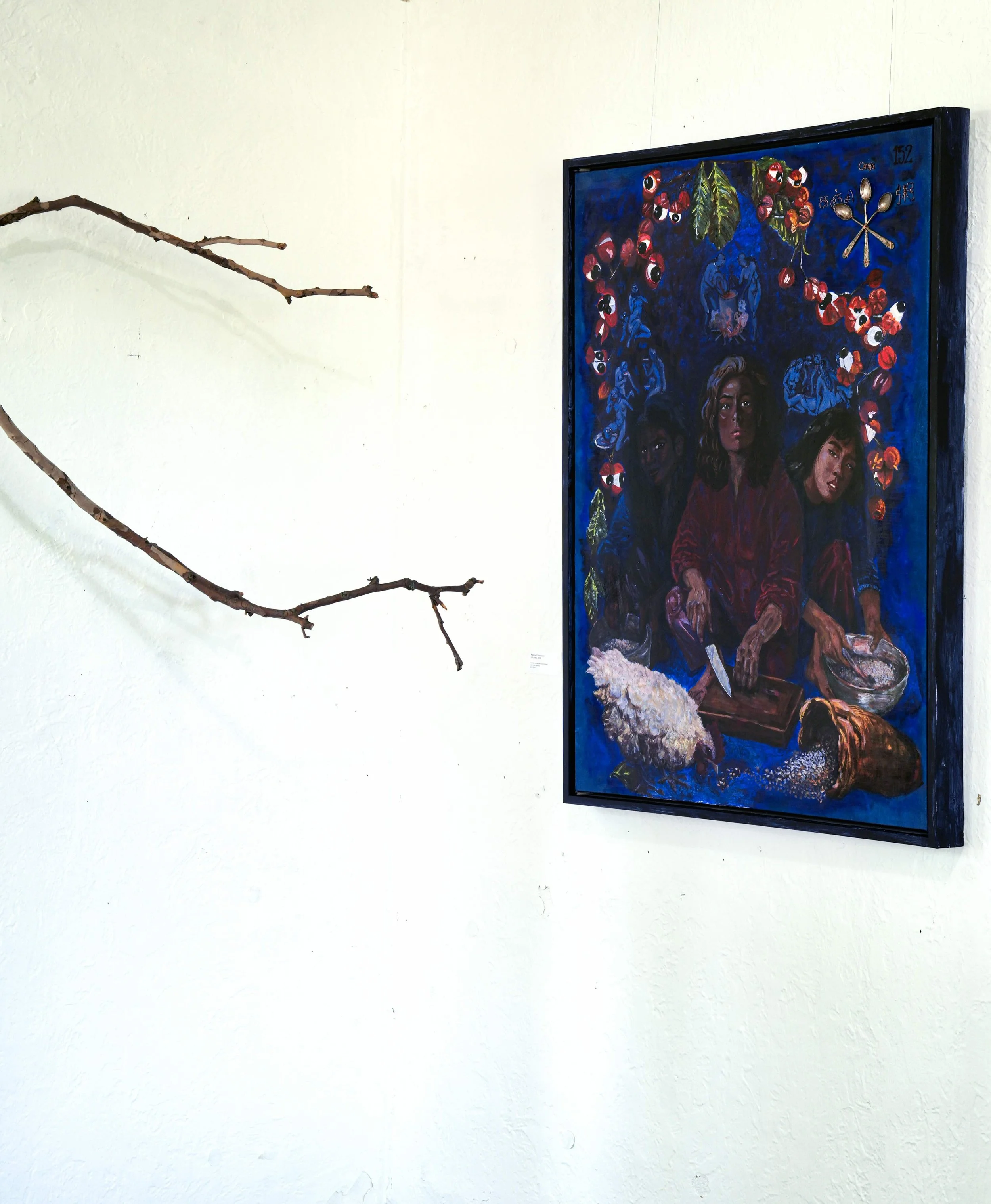
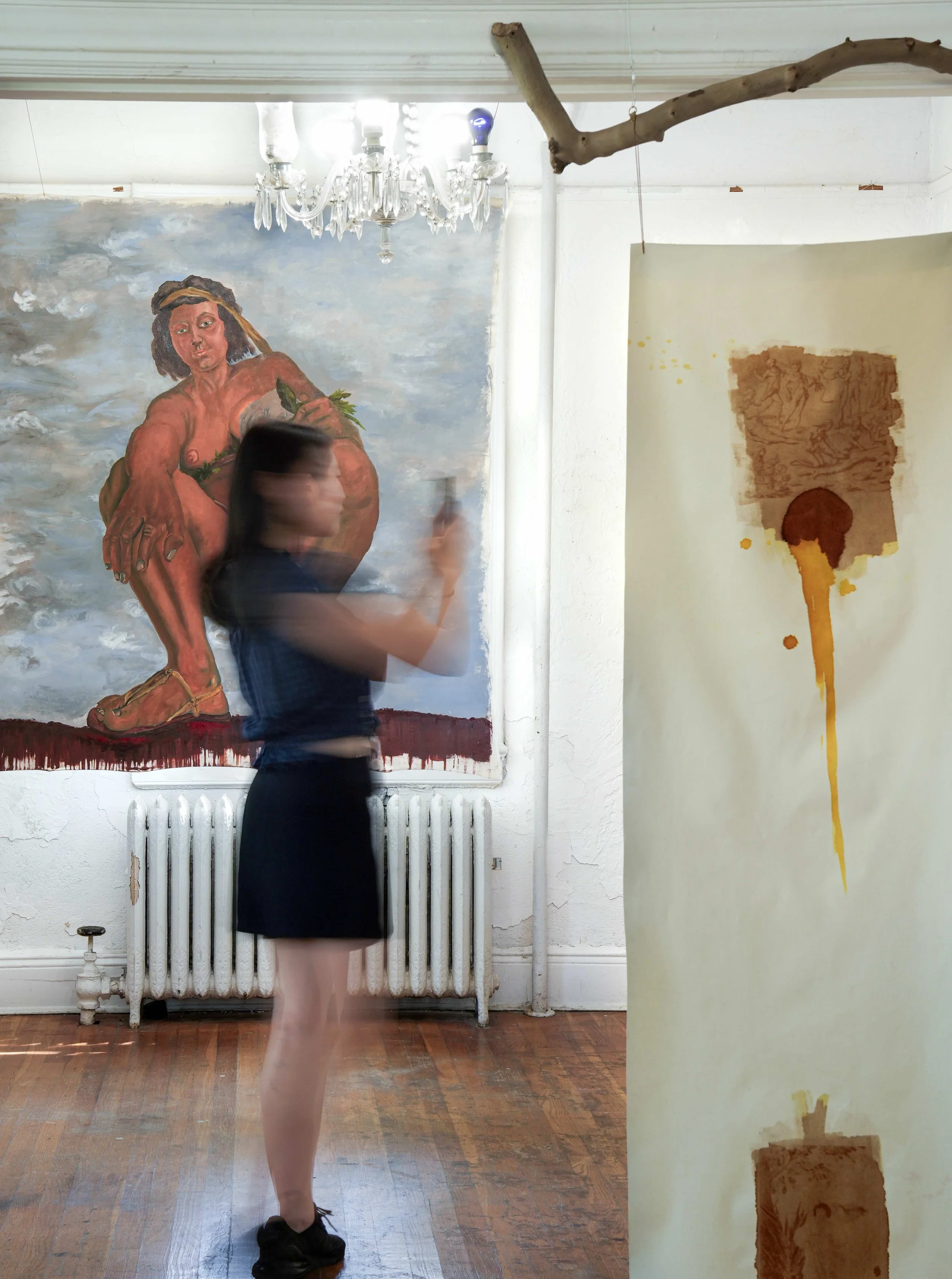
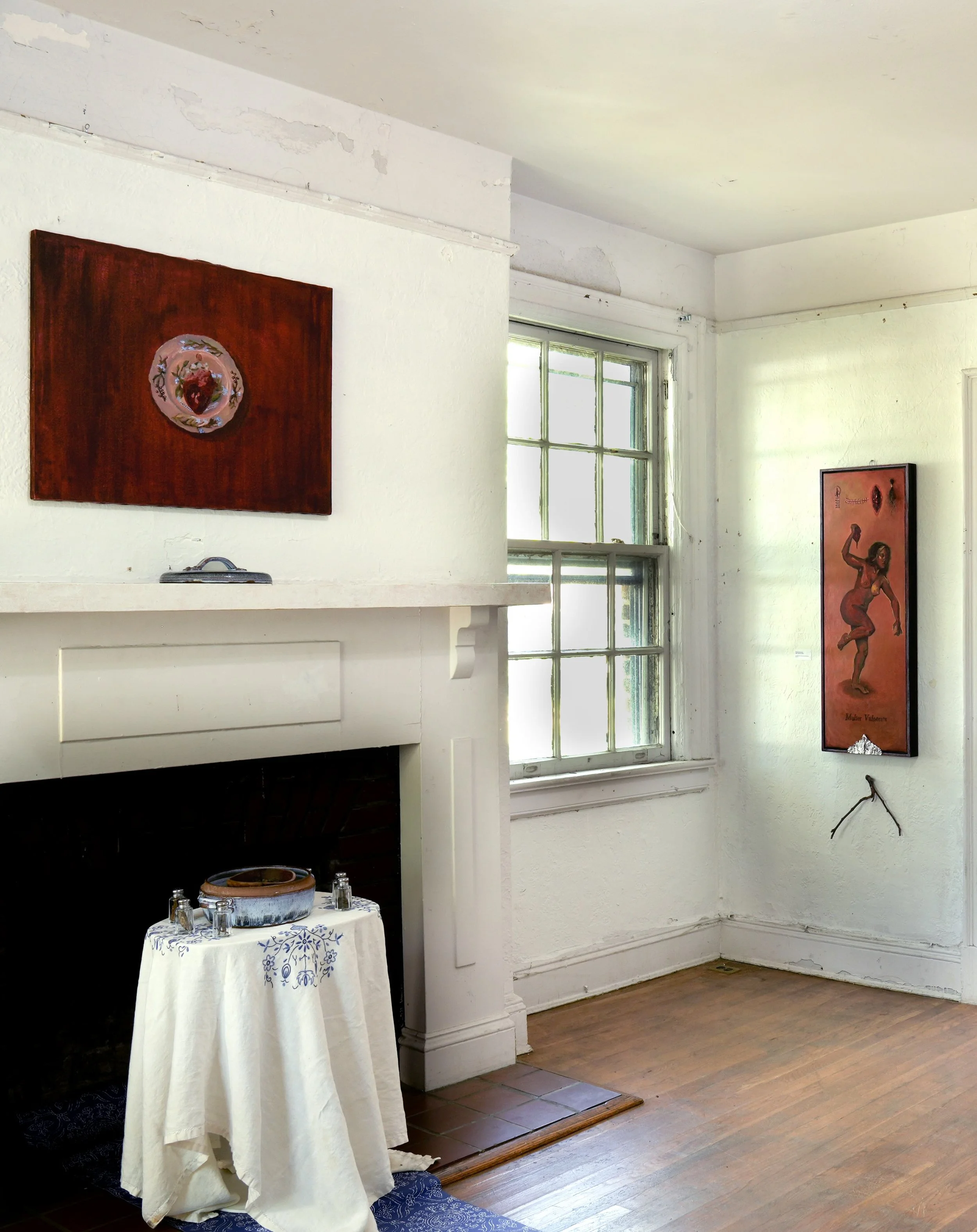
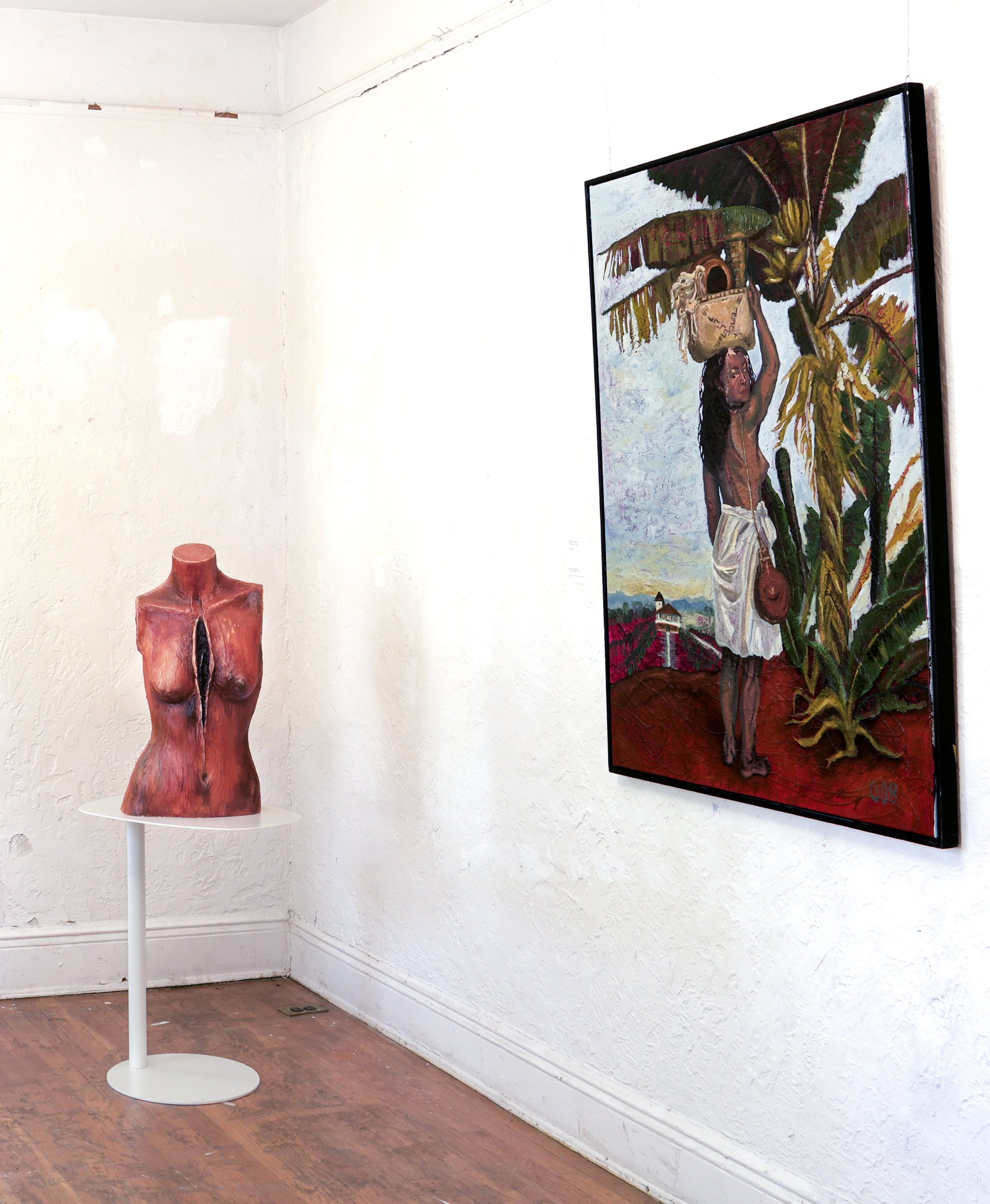
Gringo à Brasileira is a site-responsive exhibition examining how Brazil has been imagined, classified, and made visible through colonial archives. Bringing together painting, sculpture, textile, installation, and turmeric anthotypes, the exhibition reworks historical images associated with European travel accounts, ethnographic representation, religious persecution, and the extraction of bodies, land, and natural resources.
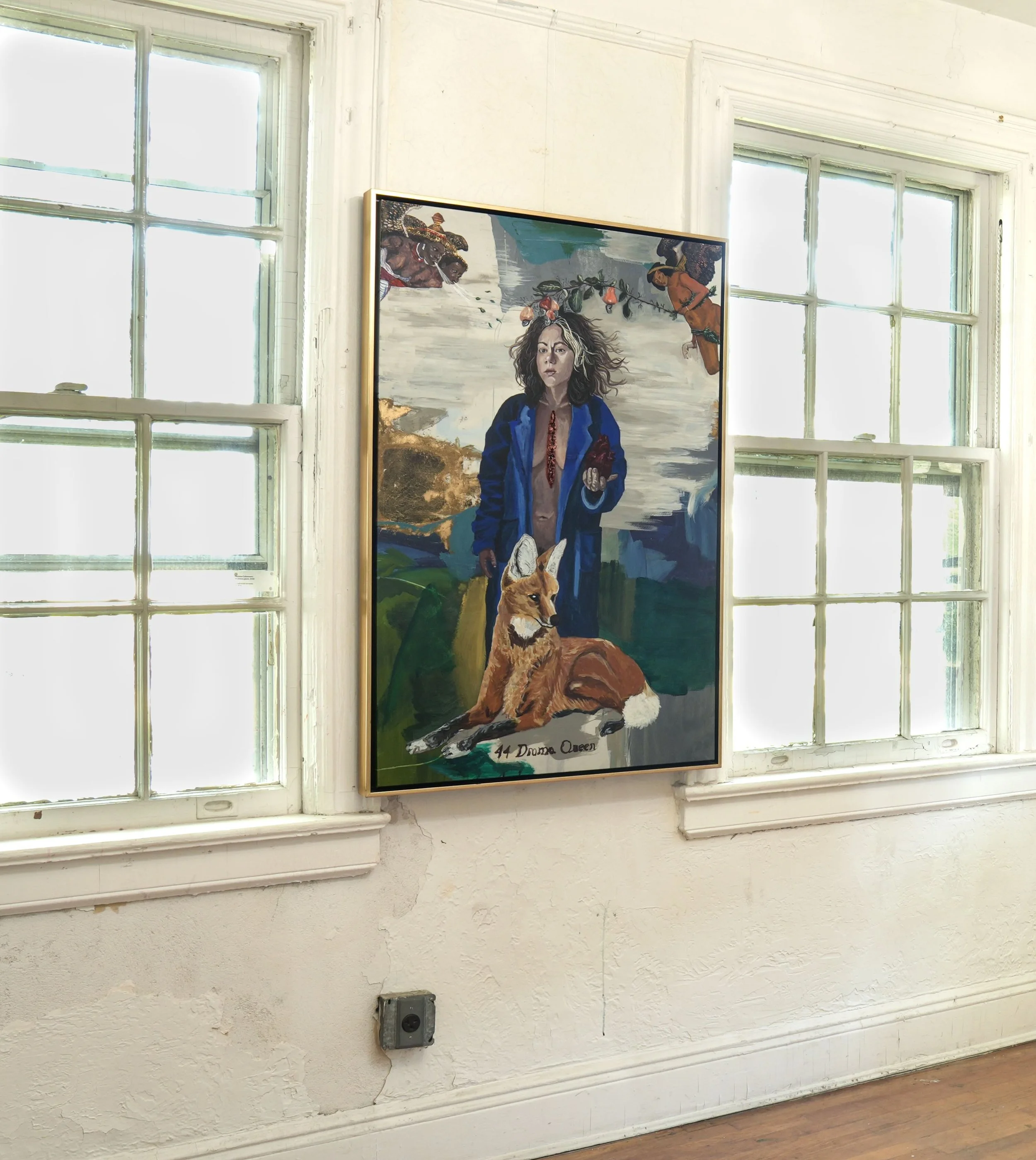
Rather than rejecting the colonial archive, Colmenero enters and destabilizes its visual language. Historical figures are fragmented, enlarged, stitched, displaced, and confronted by the artist’s own body. The observed subject becomes witness, author, and agent of her representation.
Developed from the position of a Brazilian immigrant living in the United States, the exhibition also considers the instability of belonging. Its title plays with the shifting meaning of “gringo”: a word that marks the foreigner while revealing that foreignness is always produced from a particular point of view.
Across the installation, discarded, organic, and vulnerable materials become part of a counter-archive in which the histories of colonization are not treated as closed events, but as structures that continue to shape identity, landscape, migration, and the ways bodies are seen.
Brazilian art is cannibalistic.
Growing up in a colonized country, artist Patrícia Colmenero became used to a diet of foreign references. Like many Brazilians searching for a language of their own, she learned to consume what came from elsewhere: foreign images, styles, canons, fantasies, violences. But what is consumed never returns unchanged. It returns digested, contaminated, mixed, regurgitated.
Gringo à Brasileira brings together works by Patrícia Colmenero. The exhibition revisits colonial images of Brazil in order to devour them, transform them, and return them through an anthropophagic gesture.
Borrowing the language of recipes, the title suggests an operation of digestion, mixture, and reinvention: the foreign gaze enters the menu and is prepared “Brazilian style,” or “À Brasileira.” The colonial archive is not treated as a pure origin, but as residue, inheritance, copy, seasoning, and living matter.
Throughout the works, figures historically seen as exotic, monstrous, or available for visual consumption look back. Portraiture ceases to function as document and becomes confrontation. Gringo à Brasileira prepares Brazil’s colonial past as a dish and serves it to the public.